
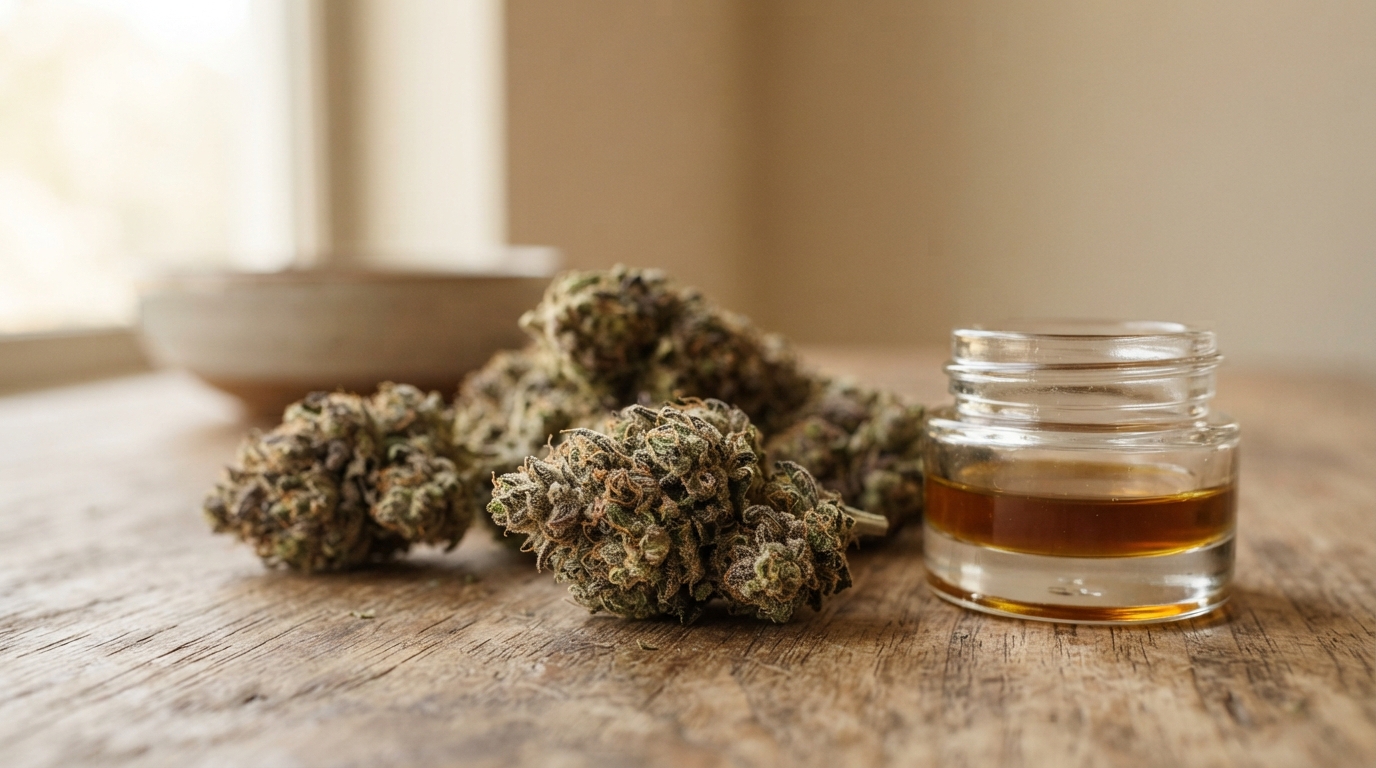
Interest in THCA has grown rapidly across the U.S. hemp market, bringing increased attention to how these products work, how they differ from traditional THC products, and where they stand legally. For consumers considering THCA flower, concentrates, or vapes, understanding its effects, safety considerations, and changing regulations is an important starting point.
What is THCA? THCA is a non-psychoactive cannabinoid found in raw cannabis flowers, meaning that unlike THC, consuming it in its raw form does not produce the typical “high” associated with cannabis. That single distinction shapes everything about how THCA products are used, regulated, and sold across the United States.
How THCA Becomes THC: The Chemistry That Matters
Research has found that if THCA undergoes decarboxylation, a process that converts it into THC, it can then induce mind-altering psychoactive properties. Decarboxylation is simply the removal of a carboxyl group from the molecule, triggered by heat.
Heat activation occurs when cannabis is exposed to temperatures above 212 degrees Fahrenheit (100 degrees Celsius), with optimal conversion happening around 230 to 250 degrees Fahrenheit over 30 to 45 minutes. Smoking or vaping reaches those temperatures almost instantly, which is why heated THCA products deliver effects that feel identical to traditional cannabis.
Unlike THC, THCA does not directly bind to cannabinoid receptors (CB1 and CB2) in the brain, which is why it does not produce the intoxicating effects commonly associated with cannabis. This receptor difference is the core reason raw THCA is explored for potential wellness applications without the psychoactive profile of THC.
THCA Legality in the USA: What the Rules Actually Say
Under the 2018 Farm Bill, hemp-derived products containing less than 0.3% Delta-9 THC are federally legal; however, the legislation does not explicitly address THCA, which can be converted into THC through decarboxylation.
Since THCA is a distinct compound from Delta-9 THC, it is not counted toward the 0.3% limit. A sample of THCA flower that tests at 28% THCA and 0.18% Delta-9 THC is federally legal, even though heating that flower would convert most of the THCA into Delta-9 THC.
That framework is changing. In November 2025, Congress amended the Farm Bill definition of hemp to include total THC concentration including THCA, closing the legal loophole and making high-THCA products above 0.3% total THC federally illegal under the Controlled Substances Act. According to the DEA’s hemp scheduling guidance, the new standard takes effect November 12, 2026.
State laws add another layer of complexity. Roughly a dozen states treat THCA hemp as fully legal, most restrict it through total-THC tests, serving caps, or flower bans, and a handful, including Arkansas, Idaho, Mississippi, North Dakota, and Alabama (for smokable products), ban it outright.
|
Compliance Category |
What It Means |
Examples |
|---|---|---|
|
Federally legal (current) |
Delta-9 THC under 0.3% dry weight |
Most hemp-derived THCA flower |
|
State-restricted |
Total-THC standard or flower ban applies |
Georgia, Colorado, Tennessee |
|
State-banned |
All THCA prohibited or smokable ban |
Idaho, Arkansas, Mississippi |
|
Post-Nov 2026 federal |
Total THC standard applies nationwide |
All high-THCA products affected |
Safety Considerations When Using THCA Products
Ingesting raw cannabis or cannabis products containing high levels of THCA may pose risks if the plant material is contaminated with pesticides, heavy metals, or other harmful substances. Ensuring the purity and quality of cannabis products is essential for minimizing potential health risks.
Three practical safety checkpoints apply to any THCA purchase:
-
Certificate of Analysis (COA): Always confirm an independent lab has tested the specific batch for potency, pesticides, and heavy metals.
-
Delta-9 THC compliance: Verify the product tests below 0.3% Delta-9 THC by dry weight under current federal rules.
-
State law: Confirm THCA is permitted in your state before purchasing or transporting across state lines.
When exposed to heat through processes such as smoking, vaping, or cooking, THCA undergoes decarboxylation, converting it into THC. This conversion increases the psychoactive effects of the compound, potentially leading to intoxication and impairment. Anyone subject to drug testing should treat heated THCA products the same as cannabis.
What to Look for When Buying THCA Online
Product format matters as much as potency. A full THCA product collection typically covers flower, concentrates, and vapes, so consumers can choose the format that fits their routine.
The most important differentiator between suppliers is testing transparency. Responsible producers grow, harvest, and hand-trim their flower with care, then send it to independent labs for testing before it ships. A COA linked directly to the product page, not just a general lab page, is the clearest signal of genuine transparency.
Luminate provides hemp-derived THCA flower, concentrates (including badder, crumble, diamond, and shatter), and vapes, with every batch third-party verified and COAs available for each product. Every product stays under 0.3% Delta-9 THC, keeping the lineup compliant under the current federal framework.
Frequently Asked Questions
Does raw THCA get you high? No. THCA is the acidic precursor of THC found in raw cannabis and hemp flower. In its natural, unheated state, THCA is non-psychoactive, meaning you do not feel a high when it is simply eaten or juiced.
Will THCA show up on a drug test? Heated THCA converts fully to Delta-9 THC, which standard drug tests detect. If you smoke or vape THCA products, assume the same detection window as cannabis.
Is THCA legal in my state? THCA exists in a gray legal area in the United States. Some jurisdictions classify it as a legal hemp-derived compound, while others treat it similarly to THC due to its potential to become psychoactive. Always verify your state’s current law before purchasing.
When does the federal THCA rule change? Raw THCA is federally legal under the 0.3% Delta-9 rule until a new total-THC law takes effect on November 12, 2026, as state bans continue to spread. Consumers and retailers should plan around that deadline now.
The bottom line for any buyer is straightforward: understand what THCA is before you purchase, confirm the product has a verifiable COA, and check your state’s current rules. The legal window for many high-THCA products is narrowing, so buying from a compliant, transparent source is not optional, it is the baseline.